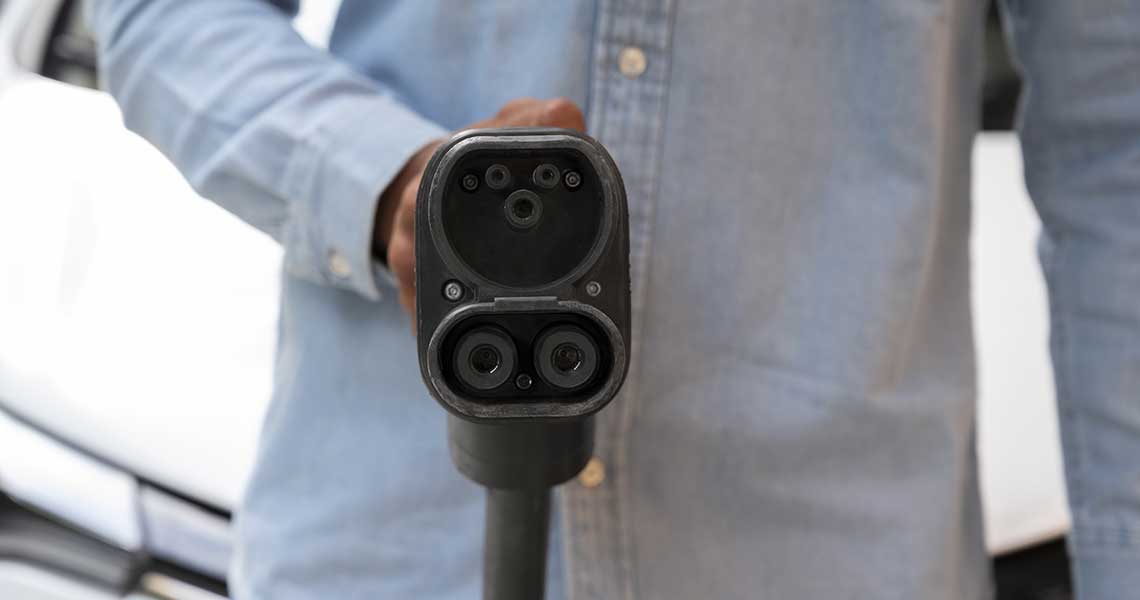


As electric vehicles go mainstream, understanding how your car gets its power has never mattered more.
Plugging In:
AC vs DC Charging Explained
Electric vehicle charging sits at the heart of the EV revolution — yet for most drivers, it remains poorly understood. Two fundamentally different technologies compete for wall-space in garages, car parks, and motorway services worldwide: alternating current (AC) and direct current (DC) charging. They differ not just in speed, but in engineering philosophy, infrastructure cost, and everyday usability.
The Patient Workhorse
AC charging — also called Level 1 or Level 2 charging — draws power from the standard alternating-current grid. The conversion from AC to the DC that batteries actually store happens inside the vehicle, handled by the car's onboard charger (OBC). This keeps charger hardware simple and inexpensive.
Advantages
- Low hardware cost — ideal for home installation
- Gentle on battery chemistry; extends long-term cell health
- Grid-friendly; easy to pair with solar panels and smart tariffs
- Compatible with virtually every EV sold today
- Widely available: offices, hotels, car parks
Disadvantages
- Slow — unsuitable for en-route top-ups on long trips
- Speed capped by the car's onboard charger rating
- Three-phase 22 kW requires specific wiring not found in all homes
The Speed Machine
DC fast charging bypasses the car's onboard charger entirely, pushing already-converted direct current straight into the battery pack. This removes the OBC bottleneck, enabling power levels that would be impossible through the car's internal electronics alone.
Advantages
- Dramatically faster — enables long-distance EV travel today
- Adds 100–200+ km of range in a typical 20-minute stop
- Motorway and highway networks rely on this technology
- Continues to advance; 350 kW units are now commercially available
Disadvantages
- Hardware is expensive — units cost £30,000–£100,000+
- Repeated fast charging can accelerate long-term battery degradation
- Requires significant grid upgrades; not practical for most homes
- Charger may exceed the car's own maximum accepted rate
- Higher per-kWh pricing at public stations
The AC vs DC choice is not a competition — it is a complementary ecosystem. AC charging is the backbone of everyday ownership, ideal for overnight home charging and workplace top-ups where time is not a constraint. DC fast charging is the enabler of long-distance travel, solving range anxiety on motorways where every minute counts. The healthiest EV lifestyle combines both: lean on slow AC charging at home to protect your battery, and use DC fast chargers strategically on longer journeys. As battery technology matures and grid infrastructure expands, the line between the two will continue to blur — but for now, knowing which plug to reach for, and when, remains the most practical skill any EV driver can have.